

Floor Sanding
Boards are grey, scratched, patchy or still wearing a coating from the 1990s.


Ring Paul. He will tell you straight, no charge for the quote.
Get My Free Quote“They really need to change their name to 5 star”Theo Modlik, Parapine ITM


We supply and install from New Zealand’s leading timber suppliers.
Based at 16 Gear Street, Petone. We work from Island Bay to Otaki. Not sure if we cover you? Call 0800 005 287.
“The pricing is fair and the workmanship has been immaculate.”Theo Modlik
“The floors are still impeccable.”Linda and Paul, KhandallahRead all 8 reviews

The grey, tack-marked native timber under your carpet is almost always worth saving. We sand it back to clean boards and coat it with Synteko Nova Best XC or moisture cure polyurethane, two to three working days, depending on size, from the machines arriving to you standing on it in socks.
No obligation. Call Paul or send him an email.
4 Star Flooring sands, coats, stains, repairs and lays timber floors across the Wellington region, residential and commercial. Find the row that matches your floor.
Boards are grey, scratched, patchy or still wearing a coating from the 1990s.


The coating is worn in the traffic lanes but the timber underneath is sound.


New solid, engineered, laminate or vinyl plank, supplied and laid.


Budget-conscious, high-traffic, and the answer where there is no timber to sand.
Offices, churches, retail fitouts and body corporate jobs usually run at night or over a weekend so the place keeps trading. See commercial flooring.
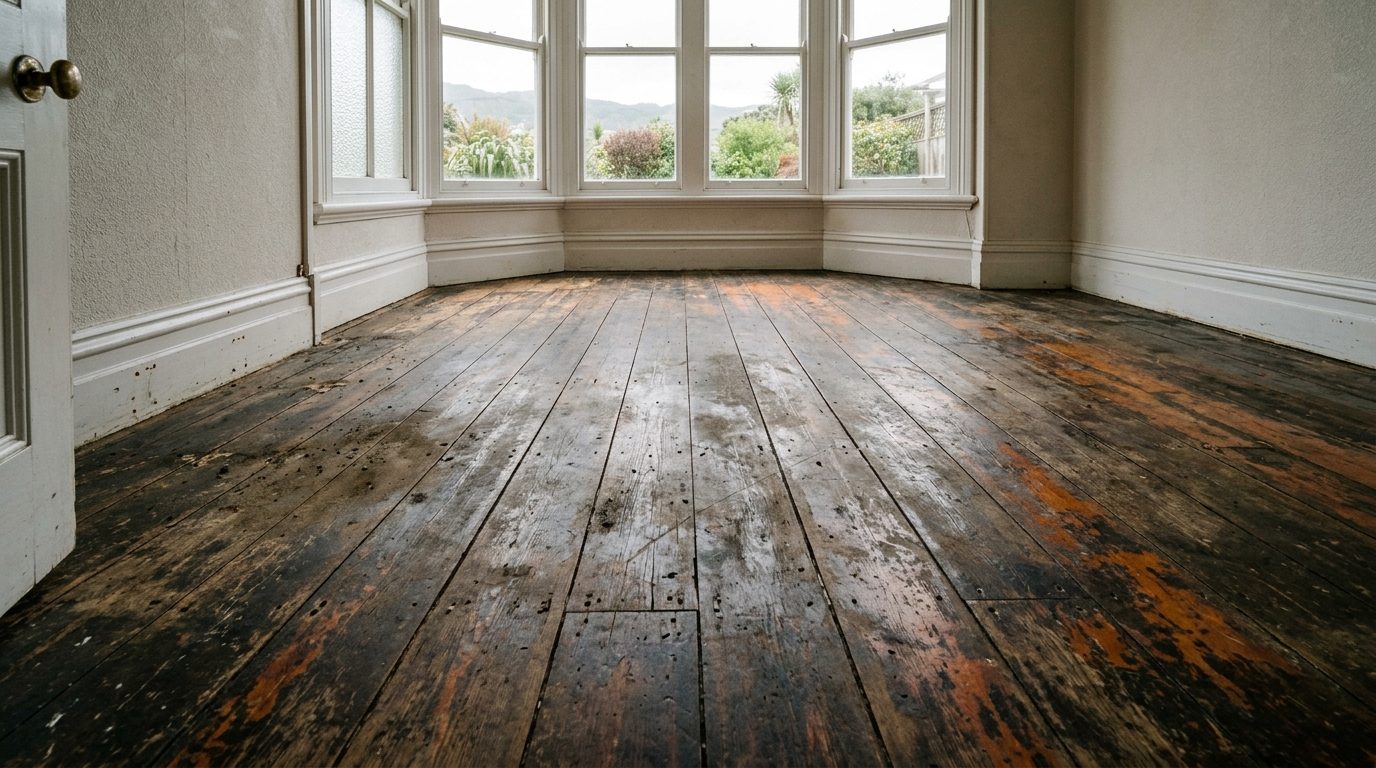
Wellington houses built before the late 1960s were floored in native timber, usually matai and sometimes rimu. Carpet was laid over the top and has often stayed there ever since. Lift a corner in the hallway and you'll typically find tongue-and-groove boards, tack holes around the perimeter, staple lines from the underlay, and a greyed-off surface where the timber has oxidised over decades.
That grey layer is only about a millimetre deep. The dark rectangle where the underlay stopped short of the wall sands out too, along with scratches, scuffs, and most surface water marks. Underneath is the same native timber the builder put down, and it's worth more now than it was then.
Some imperfections only become obvious after sanding and coating. A deep knife cut from a carpet layer's trimmer, a stain left by old rubber underlay, a water mark that has soaked through the fibre, or a board rotted from a long-term leak, these do not sand out. Those boards would need to be repaired or replaced.
A simple rule applies: if you can feel a dent with your finger, it needs a full resand to remove it, not a buff and coat.
The other common Wellington job is a floor that was sanded eight or ten years ago and now looks dull in the main traffic and sunny areas but perfect under the bed. That usually wants a recoat, not a full resand, at a fraction of the cost. If it has been left too long, the floor will need a full resand, as a buff and coat will not remove any scratches or dents, or change the sun-bleached area. We tell you honestly which option preserves your timber and your budget.

I have used 4 Star Flooring twice now, they really need to change their name to 5 star! The pricing is fair and the workmanship has been immaculate. Give Paul a call, you cannot go wrong with this company.
We have recently [completed] our renovation and chose 4Star Flooring to lay a Matai floor in our new extension, plus sand and coat our new and existing Matai floorboards throughout the house. Their work was impressive and the manager, Paul, was readily available to talk us through the process and provide the necessary advice. He suggested the floors would look at their very best with the Rona application. We have had many compliments about the standard of workmanship and, although it has been more than 12 months since 4Star did the work for us, the floors are still impeccable. We would highly recommend 4Star Flooring and especially the Rona process.
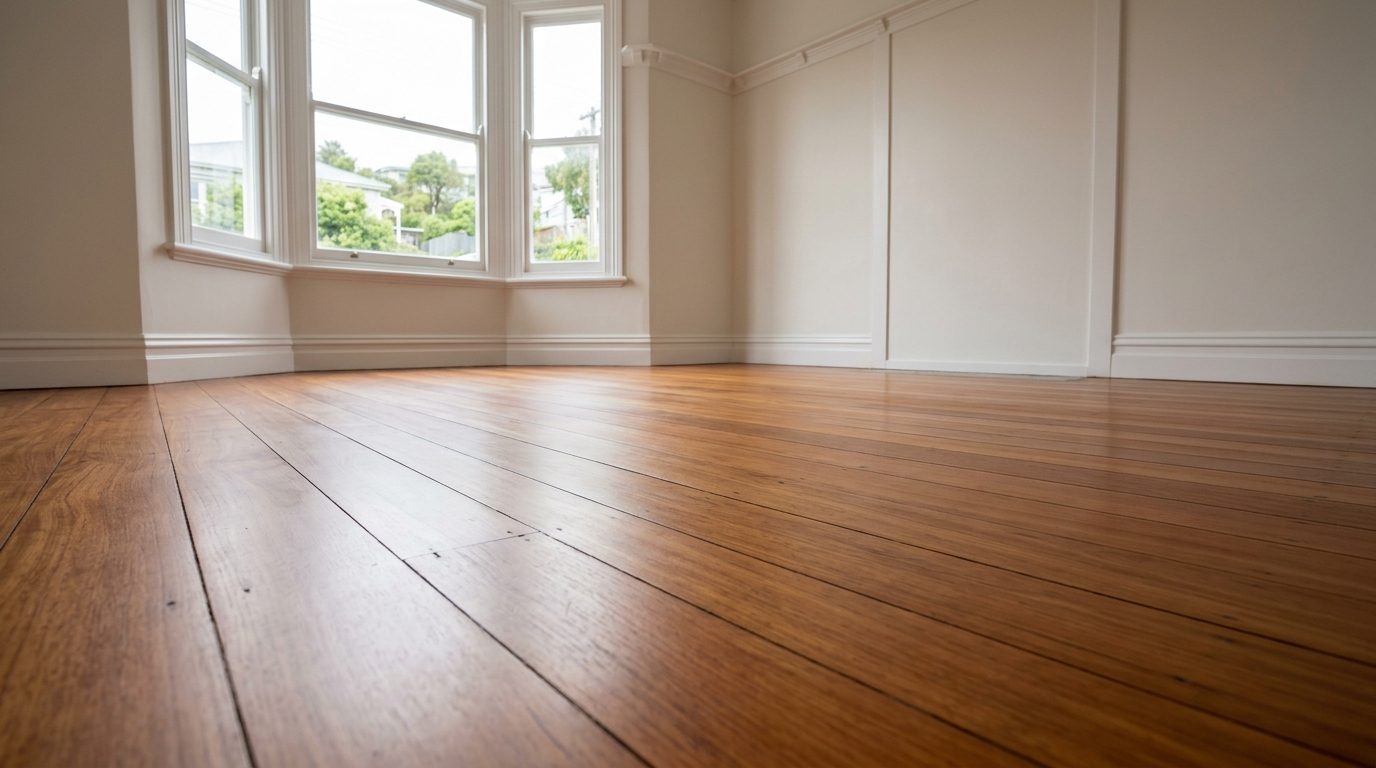
Rimu, villa lounge. Sanded back and finished in water-based polyurethane.
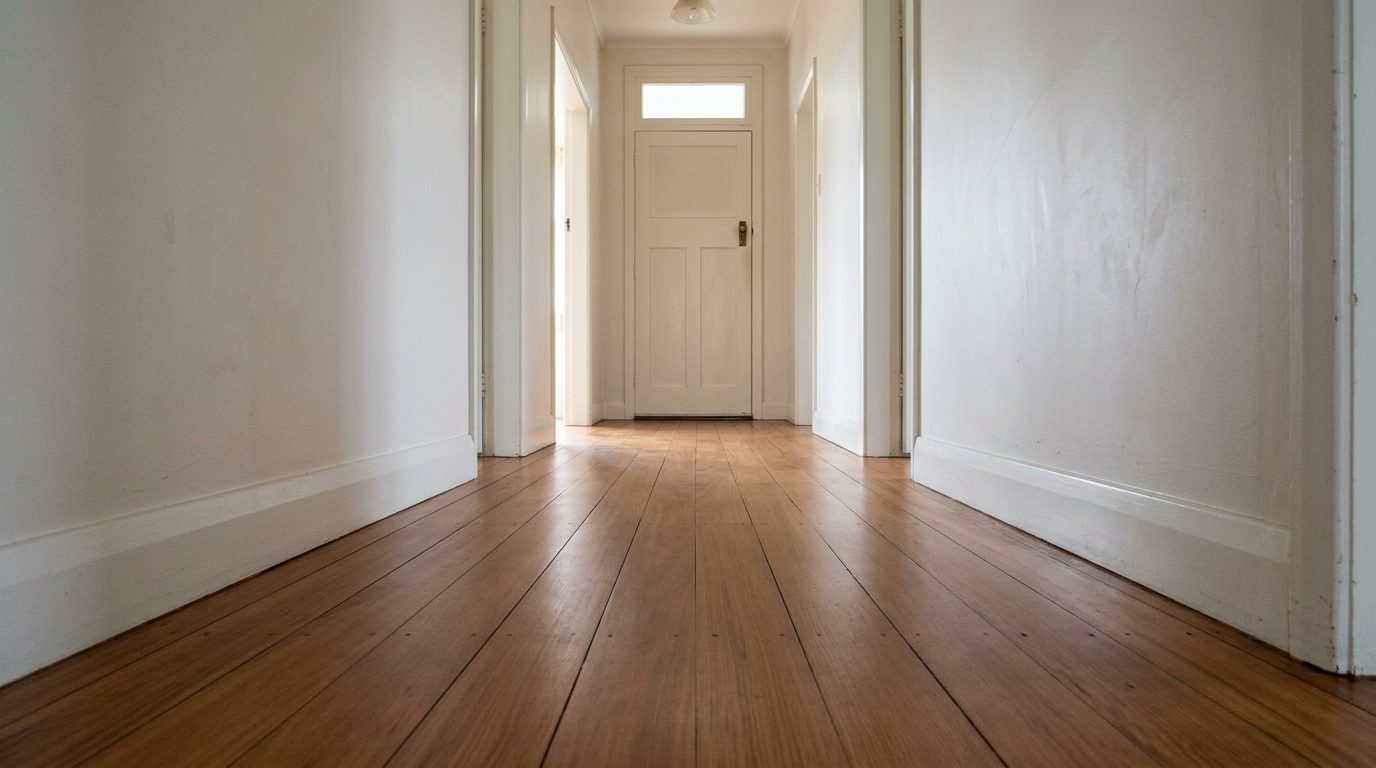
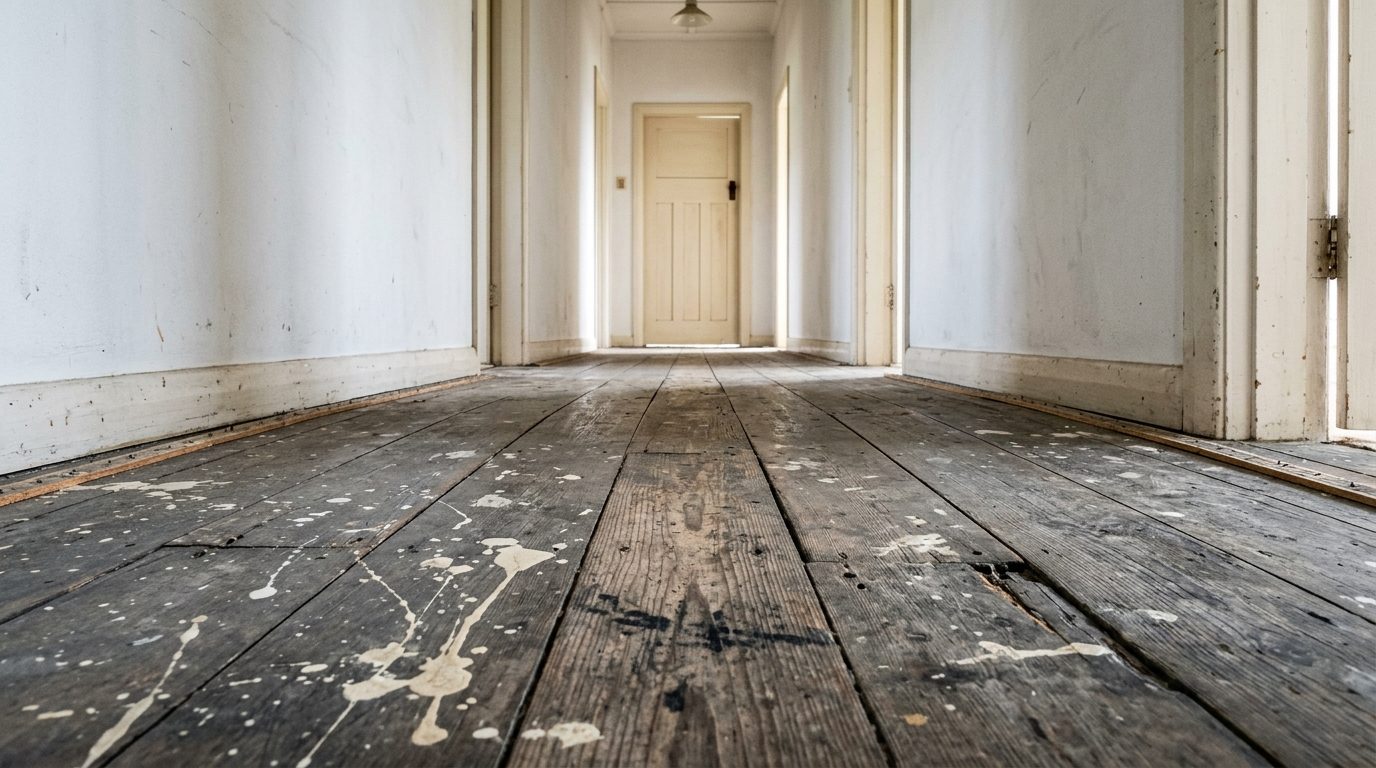
Matai, hallway. Paint spatter and grey surface taken off in the first cut.
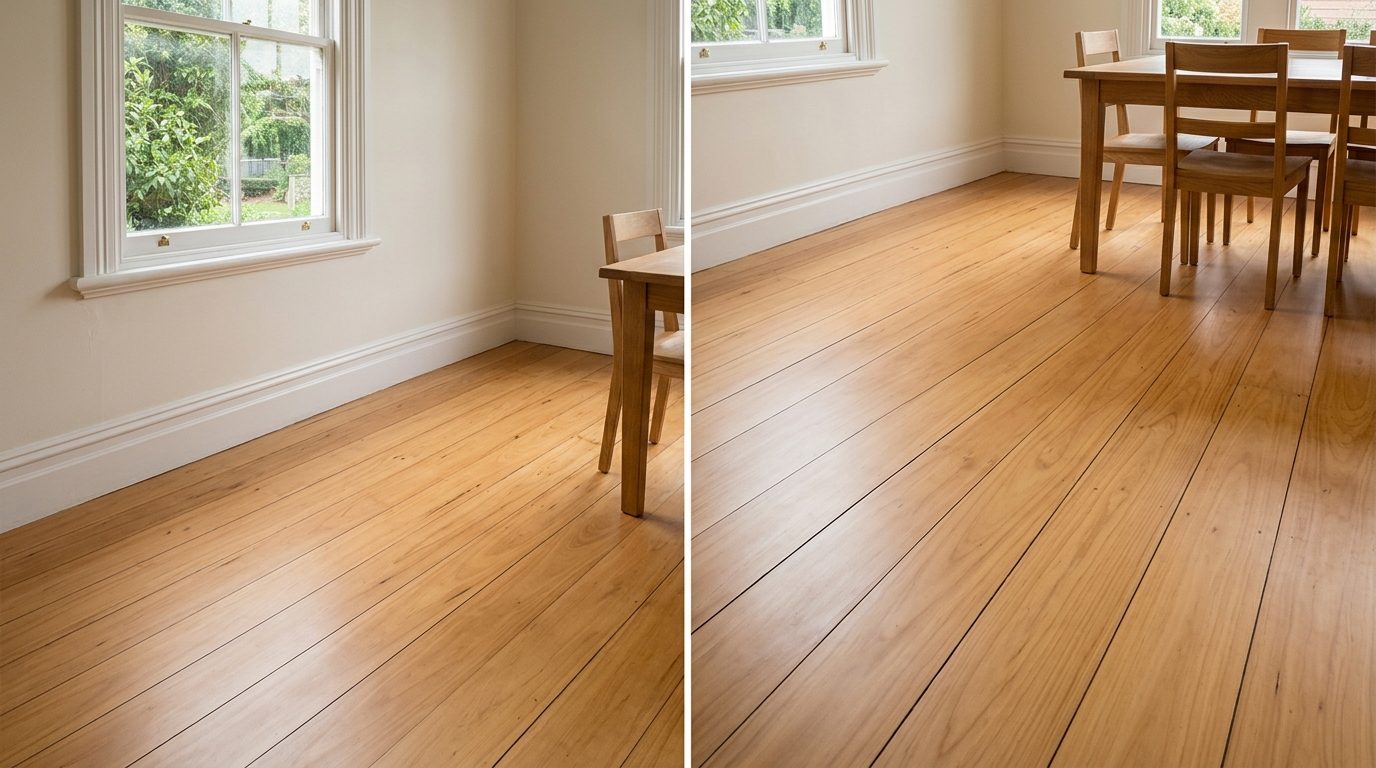
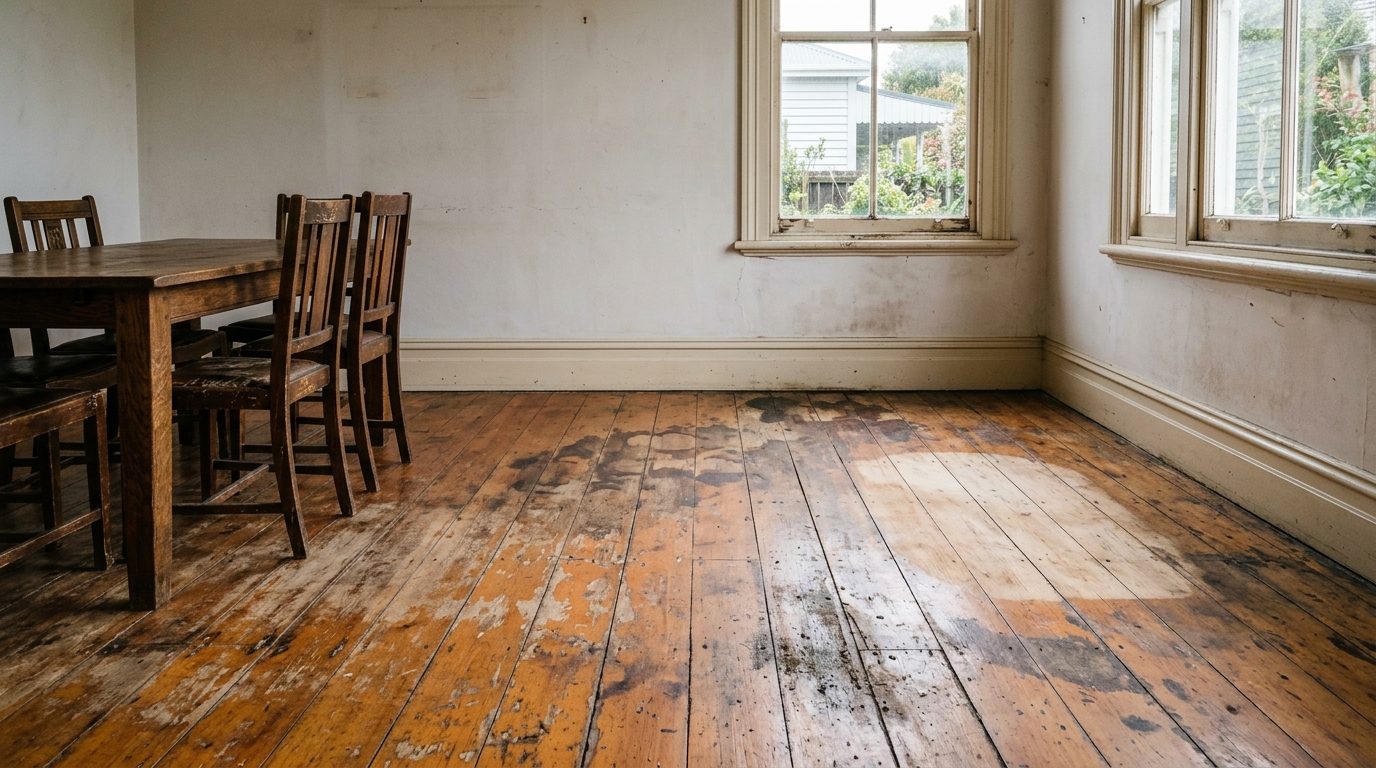
Kauri, dining room. Staining under the table sanded out, then three coats.
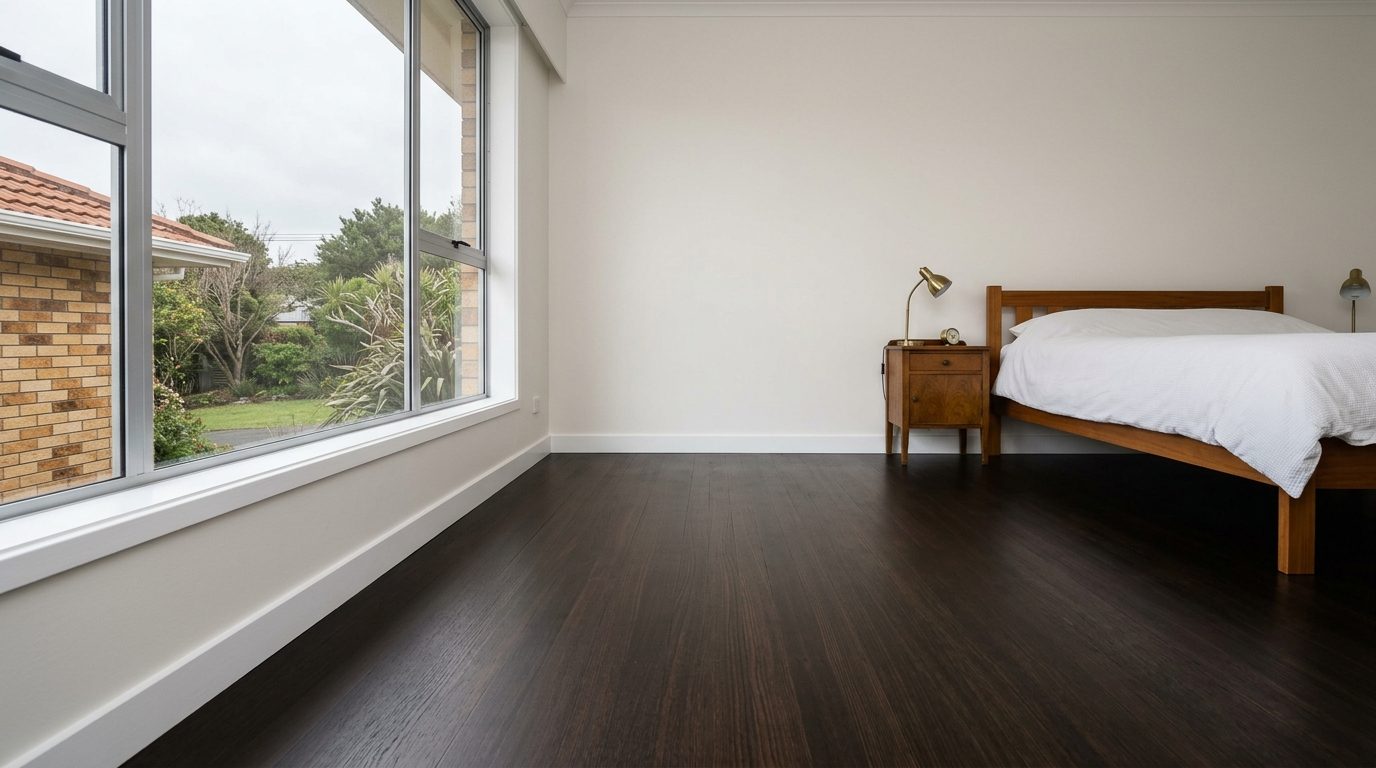
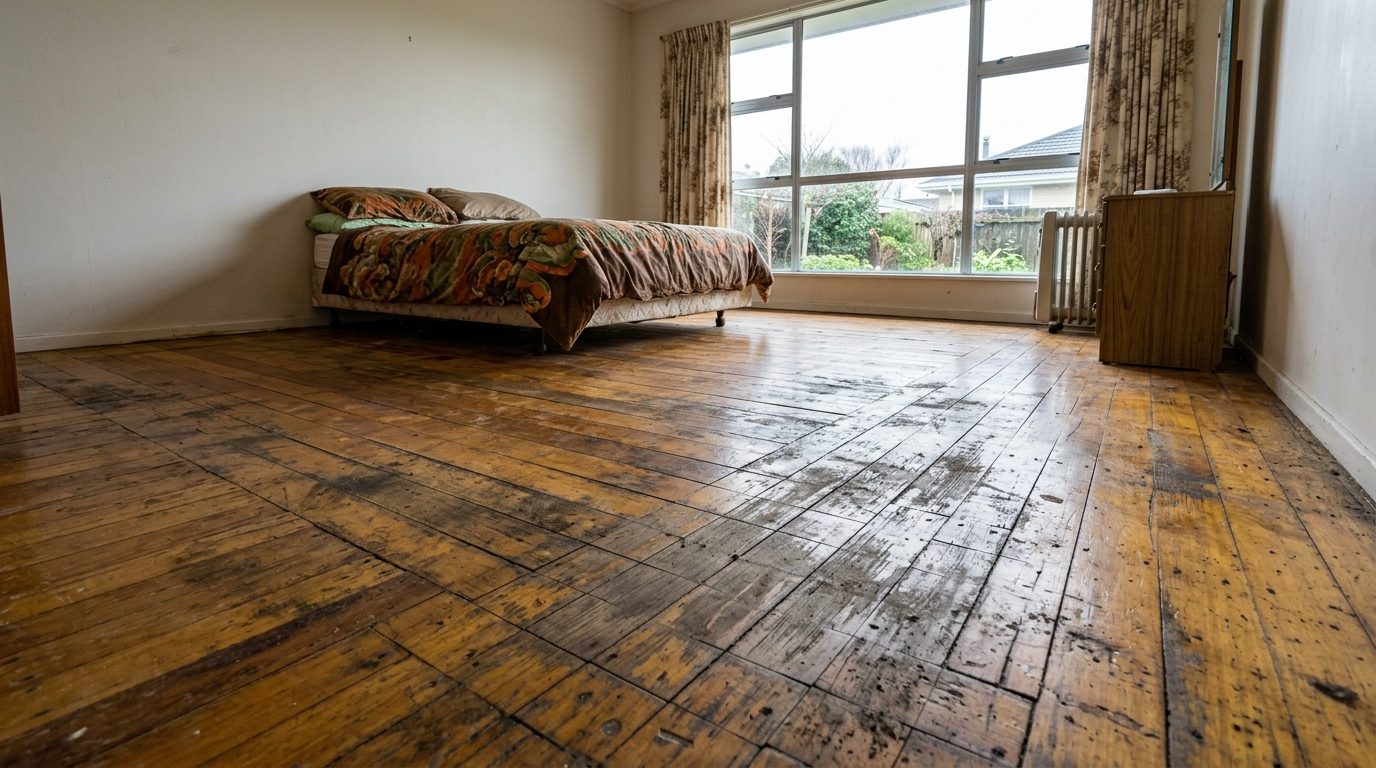
Tawa, bedroom. Failed coating removed and the floor stained dark to even it out.
Our workshop at 16 Gear Street in Petone puts most of the region inside forty minutes of the machines. We also work in Khandallah, Karori, Wadestown and Seatoun.

There is usually good rimu under your carpet. We sand it, coat it and tell you when it is not worth saving, and we know what it takes to get machines into a house with forty steps and no parking.

Petone workers' cottages, Eastbourne baches and the postwar streets. Our workshop is here, so start dates are more flexible than anywhere else we work.

Larger floors, and a lot of 1970s builds where the original flooring has had one owner too many. The bigger the open area, the better the rate per square metre works out.

Whitby and Papakowhai are mostly eighties and nineties construction, which changes what can be sanded and what should be replaced. Titahi Bay is a different question entirely.

Waikanae, Paraparaumu, Raumati and Otaki. Salt air and hard western sun affect the coating we recommend more than they affect the sanding.
Not sure whether you are inside the area? Ring 0800 005 287 and ask.
Paul owns 4 Star Flooring, measures your rooms, writes the price, orders the timber and schedules the crew. Five of the eight reviews on this site name him, and paul@4starflooring.co.nz reaches him directly.
Read more on the about page, or go straight to getting a quote.
A typical Wellington sand and coat runs four to five working days. Stairs, stain and cold weather stretch it.
Floor sanding is priced per square metre, and the figure moves on floor area, timber type and condition, the number of coats, whether you want a stain, and whether the floor has been sanded before. A small hallway costs more per metre than an open-plan living area, because the setup takes the same time either way.
Sanding and coating is quoted per square metre, with the rate falling as the area grows. Stairs, stain, board replacement and nail hole filling are priced separately.
Ring Paul on 0800 005 287 or email paul@4starflooring.co.nz. He walks the house, measures, checks the timber above the tongue and writes you a fixed price listing rooms, grits, coat count, coating system and the exclusions. There is no charge for the visit and no obligation after it.
Two to three working days for a typical Wellington sand and coat, depending on the size of the job, from the machines arriving to walking on it in socks. Furniture goes back three to five days after the final coat and rugs two to four weeks after that. We will send you care and maintenance instructions.
Native timber, if your house in Wellington was built before the 1960s. Usually matai, sometimes rimu. Lift a corner in a wardrobe and look for tongue and groove boards, anywhere from 50mm to 140mm wide and everything in between, then ring Paul and describe what you found. He will be more than happy to call in, have a look, and give you a free written measure and quote.
We work from Island Bay to Otaki as standard: Wellington City, Lower Hutt, Upper Hutt, Porirua and the Kapiti Coast, including Khandallah, Karori, Wadestown and Seatoun. Jobs further into the Lower North Island are taken case by case, with travel priced into the quote.
Surface marks, scratches and light water staining come out with the top millimetre. Black rings around nail holes, urine stains and anything soaked into the fibre sit deeper than a sander can safely go. Those boards get replaced, or the floor gets stained darker to even it out. Or it's character, and it tells the life story of your house.
Our machines capture the great majority of it at the source. Some fine dust still settles through the house, and you will find traces on top of a wardrobe a fortnight later. Anyone promising a dust-free sand is selling you something.
Ring Paul or send him an email. He will walk the house, measure it, and tell you whether you are looking at a sand, a recoat or a repair, and what it costs, in writing.
Summer books out first in this trade, and coatings need longer between coats in a Wellington winter, so a job you want finished before Christmas is worth pricing in spring.